Pizza Map›Pizza History

From Naples to the Five Boroughs

The Story of New York Pizza

From Italy to New York. Go back in time and discover the origins of NYC Pizza.

140+ Years·Three Eras·Five Boroughs

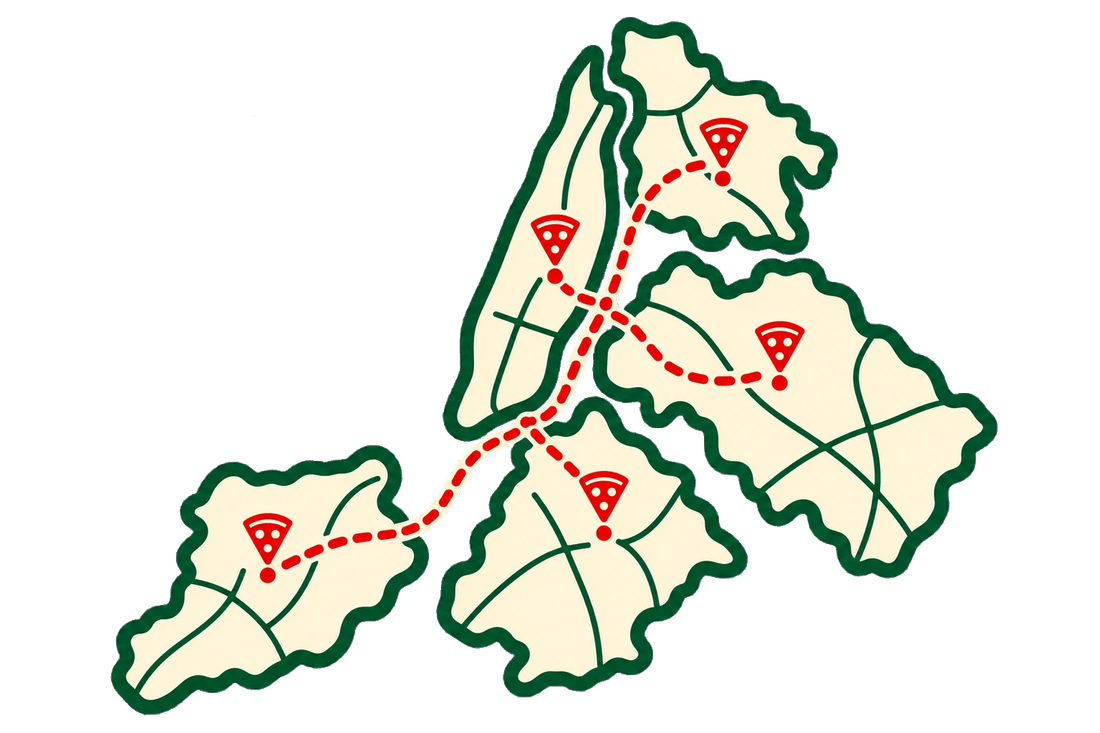
Illustrated map of the five boroughs, each marked with a pizza slice pin and connected by a dotted delivery route

The Beginning

1880s–1933

Immigration, coal ovens, and the first pizzerias

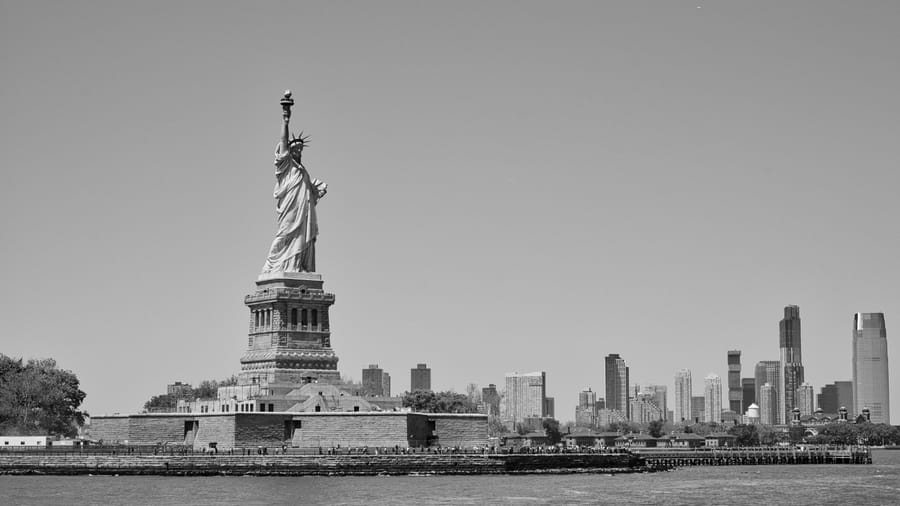
The Statue of Liberty with the Lower Manhattan skyline behind it

The Great Italian Immigration

Little Italy, Manhattan

Hundreds of thousands of southern Italians — mostly from Naples, Sicily, and Campania — arrive in New York City and settle in Lower Manhattan, particularly in the neighborhoods around Mulberry Street and what became known as Little Italy. They bring their food with them, including the flatbreads and tomato pies of their home regions. Pizza, as they knew it, was humble street food — sold by vendors in the streets of Naples, topped simply with oil, garlic, and tomato.

See the Little Italy & Nolita guide →
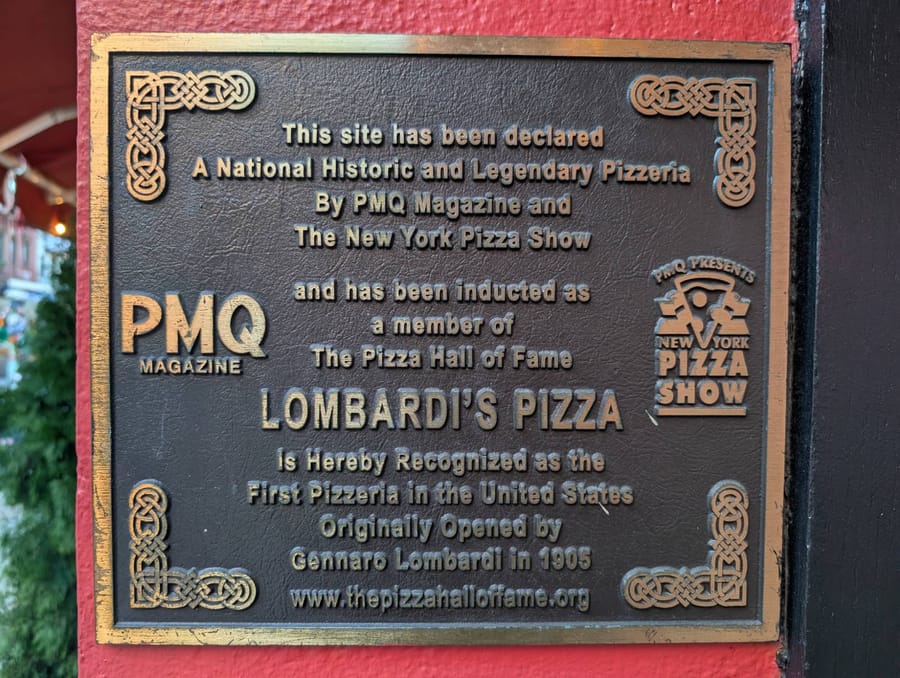
Lombardi's — America's First Licensed Pizzeria

Little Italy, Manhattan

Gennaro Lombardi takes out a licence to sell pizza at 53½ Spring Street in Little Italy — the date New York has kept ever since as the start of the American pizzeria. Tomato pies went out wrapped in paper and tied with string, sold to the factory workers of the neighborhood. The tidy version has been complicated since: accounts published in the 1950s put a pizzeria at that address as early as the 1890s, and one has Lombardi as an apprentice who bought the business for $200 rather than founding it. What is not in dispute is who came out of that coal oven. Lombardi's closed in 1984 and reopened in 1994 at 32 Spring Street, where it still runs one.

See Lombardi's on the map →
The Pizza Hall of Fame plaque outside Lombardi's, recognizing it as the first pizzeria in the United States, opened by Gennaro Lombardi in 1905
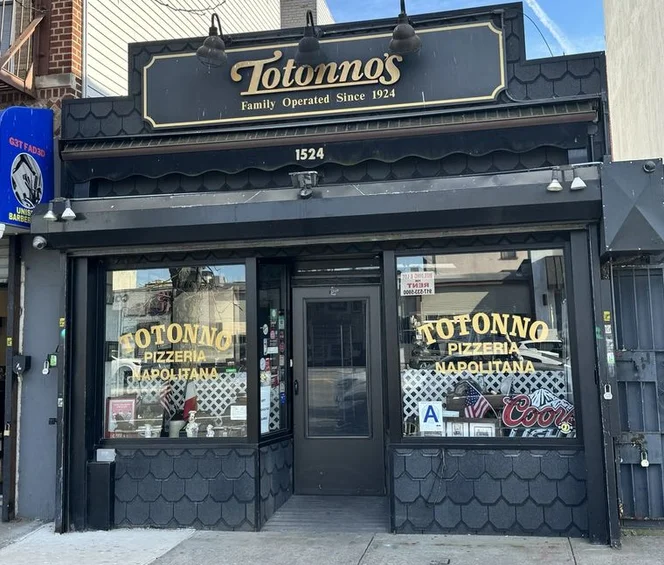
Totonno's storefront on Neptune Avenue, Coney Island

Totonno's Opens in Coney Island

Coney Island, Brooklyn

Anthony Pero, who came to America from Napoli in 1903 and worked briefly at Lombardi's, opens Totonno's Pizzeria Napolitano on Neptune Avenue in Coney Island. It becomes one of the defining coal-oven operations in the city, cash only — a rule still in force a century later. It has burned twice, in 1997 and 2009, and flooded during Hurricane Sandy, and reopened after all three. Pero's granddaughters run it today.

Read the full Totonno's profile →
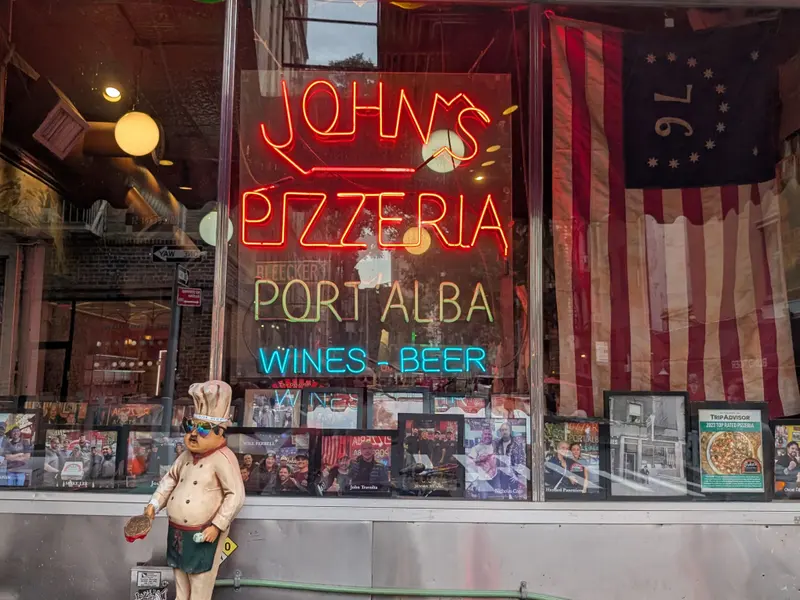
The front window at John's of Bleecker Street: red neon John's Pizzeria and Port'Alba signs over a row of framed photos of famous customers

John's of Bleecker Street

Greenwich Village, Manhattan

John Sasso founds John's Pizzeria on Sullivan Street in Greenwich Village, having taken the shop over four years earlier. When the lease goes he dismantles the coal oven and carries it to 278 Bleecker Street, where it still burns, under the same strict no-slices policy it has never abandoned. The original booths, the handwritten orders on the walls, and the same oven are all still there — one of the most unchanged restaurant interiors in the city.

See John's on the map → Every coal oven still burning →

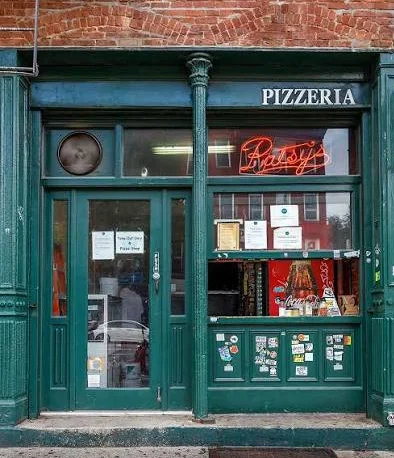
Patsy's Opens in East Harlem

East Harlem, Manhattan

Pasquale "Patsy" Lancieri, who already ran a pastry shop on First Avenue in East Harlem, converts the shop next door with his wife Carmella into the restaurant that becomes Patsy's Pizzeria. The family sold its interest in the mid-1990s. Patsy's becomes one of the first pizzerias to sell pizza by the slice — a New York innovation that would change how the whole city eats. Frank Sinatra was a regular.

See Patsy's on the map →
Patsy's Pizzeria on First Avenue in East Harlem: a green storefront with a red neon Patsy's sign in the window under a PIZZERIA sign

The Golden Era

1937–1959

Pizza becomes a New York institution

Denino's Opens in Port Richmond

Port Richmond, Staten Island

Carlo Denino opens a tavern in Port Richmond, Staten Island that begins serving pizza — thin, crispy, tavern-style pies that become the template for the Staten Island bar pie. "In crust we trust" becomes the unofficial motto. Nearly 90 years later it's still one of the borough's most beloved institutions.

See Denino's on the map →

The Outer Boroughs Boom

As Italian-American families move out of Manhattan to Brooklyn, Queens, the Bronx, and Staten Island, pizza follows. Neighborhood pizzerias open on what seems like every other block in areas like Bensonhurst, Bay Ridge, Astoria, Arthur Avenue, and Gravesend. These are not destination restaurants — they are community institutions. The regulars know the owner by name, the owner knows what you're ordering before you say it.

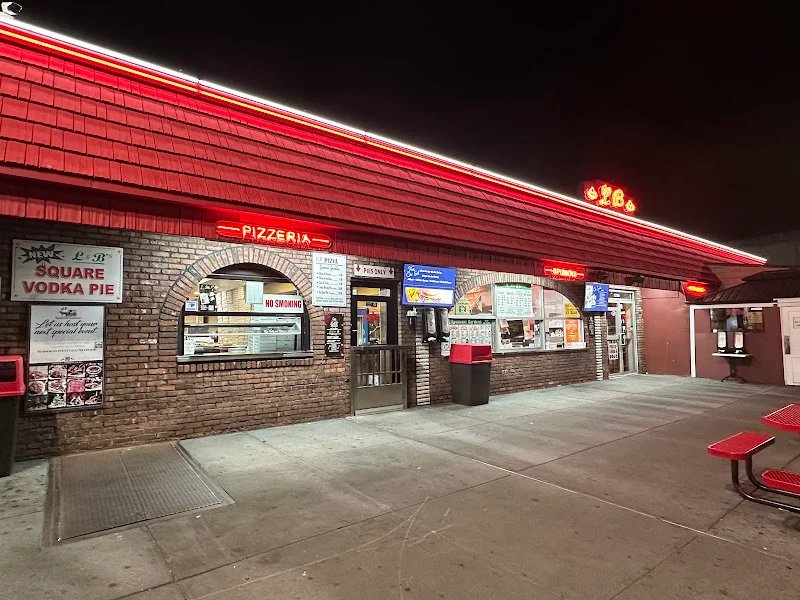
L&B Spumoni Gardens Becomes a Legend

Gravesend, Brooklyn

Ludovico Barbati, who had been selling pizza from a horse-drawn cart since the late 1930s, establishes L&B Spumoni Gardens at 86th Street in Gravesend, Brooklyn. The upside-down Sicilian square — cheese on the bottom against the crust, sauce on top — becomes L&B's signature and one of the most imitated styles in the borough.

Read the full L&B profile →
L&B Spumoni Gardens after dark, red neon along the roofline over the lit takeout windows
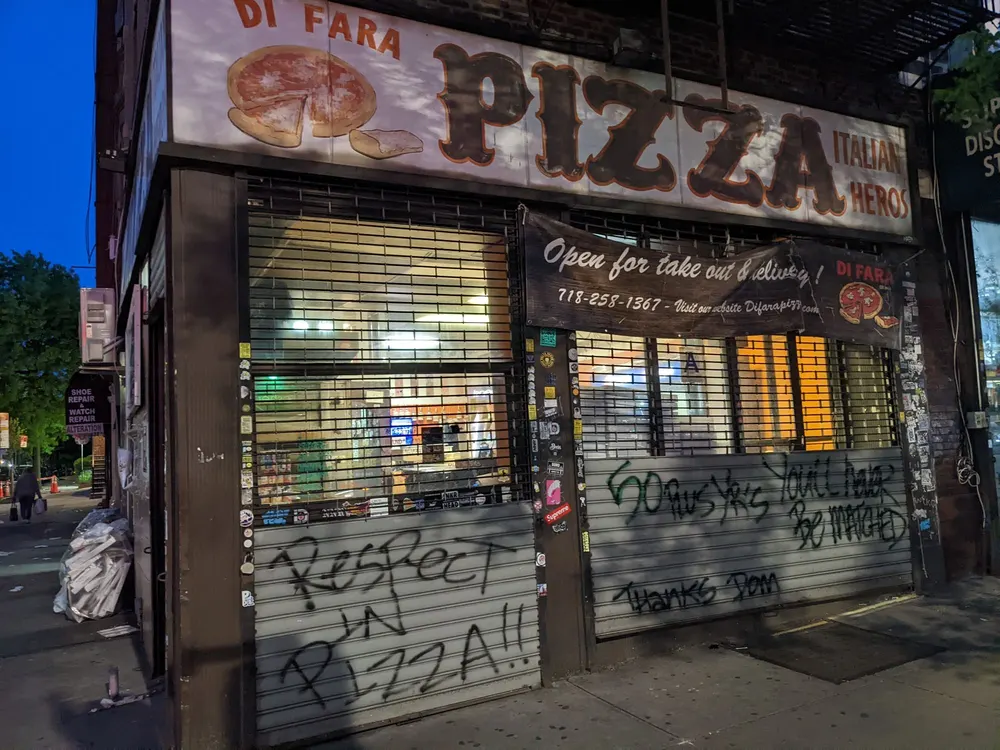
Di Fara Pizza on Avenue J with its shutters down, spray-painted with tributes: “Respect in pizza!!”, “50 plus yrs you'll never be matched” and “Thanks Dom”

Di Fara Opens in Midwood

Midwood, Brooklyn

Domenico DeMarco arrives from the province of Caserta in Italy and opens Di Fara Pizza on Avenue J in Midwood, Brooklyn. For decades it's a neighborhood spot. Then food writers discover it, and it becomes a pilgrimage — people lining up for hours for a pie that DeMarco makes himself, snipping fresh basil over each one with scissors, right up until his death in 2022. The family continues the tradition.

See Di Fara on the map →

The Modern Era

1975–Today

New styles, new generations, a global phenomenon

Joe's Pizza Opens in Greenwich Village

Greenwich Village, Manhattan

Pino "Joe" Pozzuoli opens Joe's Pizza on Carmine Street with a simple premise: one style of pizza, done perfectly, at a fair price. No tables, no delivery, no complications. Just a counter, an oven, and a classic New York slice. It becomes the most consensus-picked answer to the question "what is the best pizza in New York City."

See Joe's on the map →
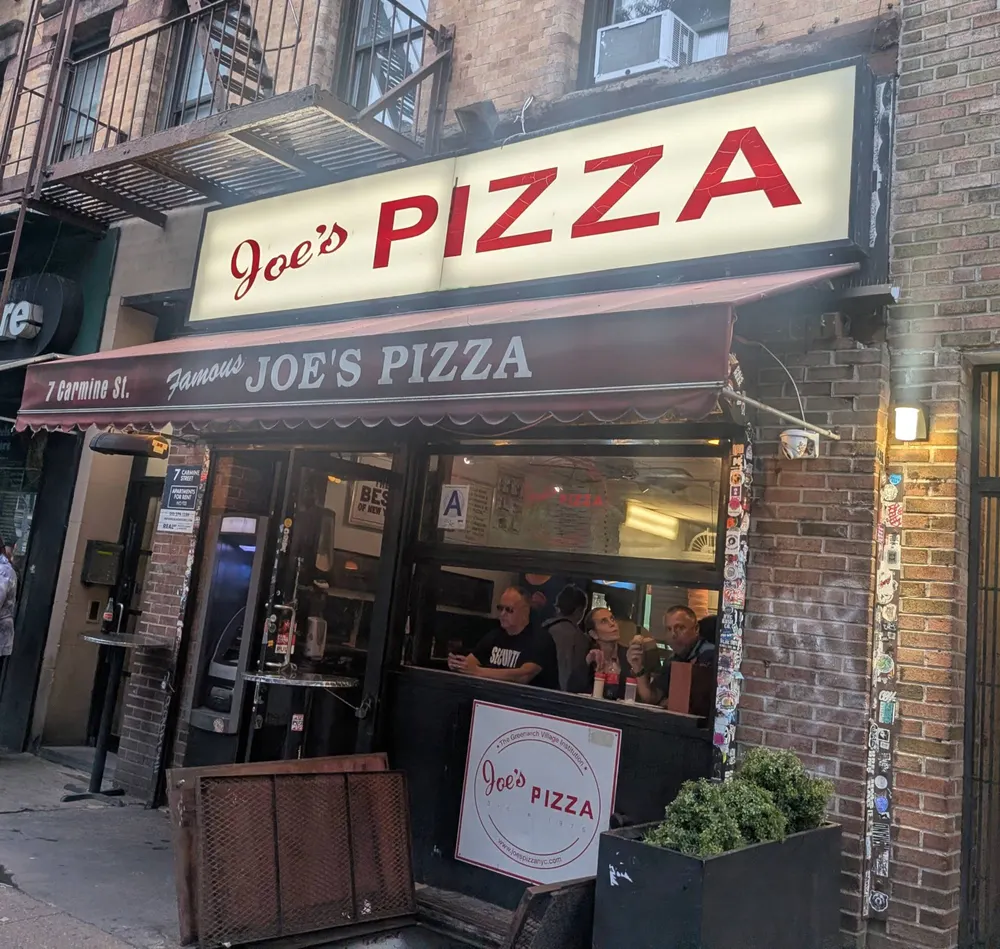
Joe's Pizza at 7 Carmine Street: the lit red-and-cream sign over a maroon “Famous Joe's Pizza” awning

Patsy Grimaldi Opens Under the Brooklyn Bridge

DUMBO, Brooklyn

Patsy Grimaldi — Patsy Lancieri's nephew, who went to work at his uncle's East Harlem oven at thirteen — opens his own coal-oven pizzeria on Old Fulton Street in DUMBO, under the Brooklyn Bridge. He opens it as Patsy's. Whole pies only, and a line down the block within a few years.

See the DUMBO guide →

The Brooklyn Patsy's Becomes Grimaldi's

DUMBO, Brooklyn

Frank Brija, who had bought the East Harlem Patsy's, sues over the name. Grimaldi later put his legal bill at more than $150,000. He loses the right to the family name in Brooklyn, and Patsy's on Old Fulton Street becomes Grimaldi's.

See Grimaldi's on the map →

The Neapolitan Revival

Carroll Gardens, Brooklyn Bushwick, Brooklyn

A wave of wood-fired Neapolitan pizzerias opens across the city, led by spots like Lucali in Carroll Gardens (2006), Roberta's in Bushwick (2008), and Una Pizza Napoletana. These places treat pizza as a craft — long fermentation, strict sourcing, DOP-certified ingredients. They attract a new generation of food writers and make Brooklyn a global pizza destination.

See the Carroll Gardens guide →

Juliana's and the Old Fulton Street Split

DUMBO, Brooklyn

Grimaldi's — sold by Patsy and Carol Grimaldi to Frank Ciolli in 1998 — is evicted from 19 Old Fulton Street and moves two doors away to 1 Front Street. Grimaldi comes out of retirement at eighty to reopen the original room, coal oven still intact, as Juliana's. Two coal-oven pizzerias, two doors apart, both descended from the same man. The one carrying the family name is no longer the family's.

See Juliana's on the map →

The Grandma Slice Moment

Williamsburg, Brooklyn

The grandma slice — a style that Italian-American home cooks had been making for generations, baked in an oiled square pan with a crispy bottom — gets its national moment. Best Pizza in Williamsburg, L'Industrie, and a handful of other Brooklyn spots elevate what was always a home-cooking style into a sought-after product. Food media follows and the grandma slice becomes one of the defining pizzas of the decade.

See the Williamsburg guide →
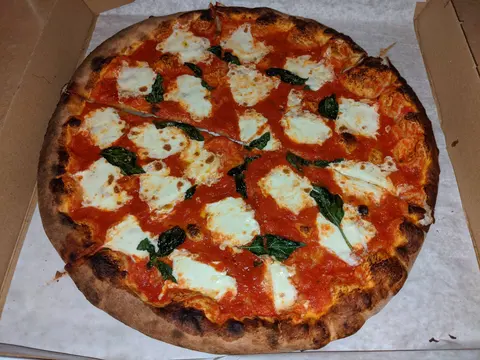
A charred-crust margherita in an open pizza box, with patches of fresh mozzarella and basil over bright tomato sauce

Still Evolving

Five Boroughs

New York pizza in 2026 is the most diverse and technically accomplished it has ever been. Coal-oven institutions that have been operating for a century sit alongside wood-fired Neapolitan spots, sourdough fermentation experiments, New Haven-style apizza shops, and grandma-slice specialists — all within the same city. The argument about who makes the best slice has never been more interesting, and there has never been a better time to do the research yourself.

The Pizza Family Tree

Every Great Pizzeria Has a Lineage

Explore how today's pizzerias connect to the pioneers who shaped New York pizza.

Explore the NYC Pizza Family Tree
Lombardi's · 1905 Totonno's · 1924 Patsy's, E. Harlem Grimaldi's · 1990 Juliana's · 2012

Dashed lines mark links the family's own history doesn't confirm. Full lineage, sourcing and the map on the family tree page.

The Story Is Still Being Written

Explore the pizzerias carrying New York's traditions forward today.